Updates | Antioch School

Where Else in the World?

“An incredible opportunity to fellowship with apostolic leaders from around the world and church leaders from North America.”

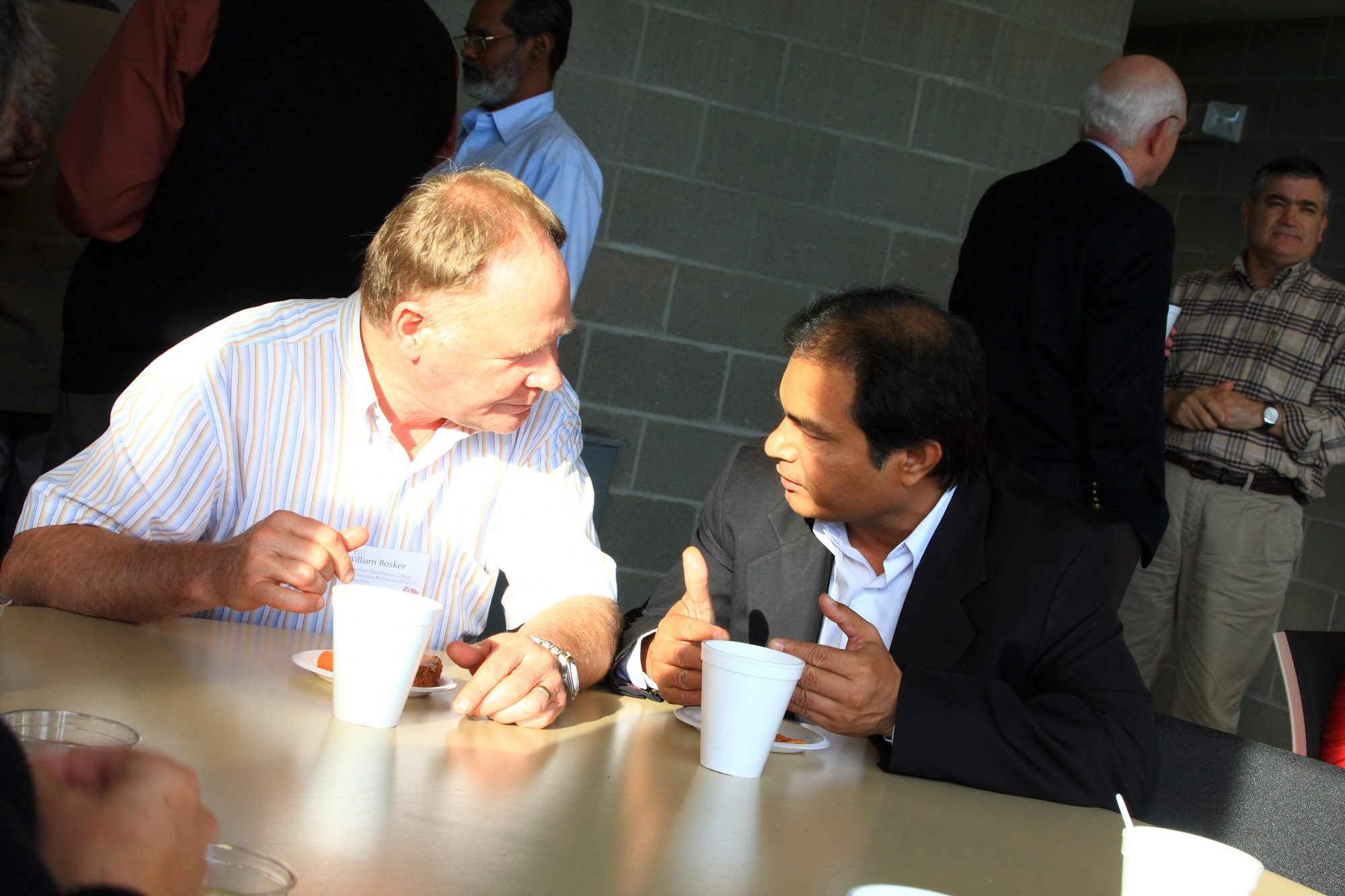
Where else in the world can you sit and pray with the bishop of an entire Indian denomination… have coffee with the training director of an African church network of 80,000 churches… have lunch with a pastor from New England who is training the next generation of leaders for his church… have tea with the director of a mission planting churches in tens of thousands of Indian villages… and go out for dinner with a pastor from Ohio who has traveled the world to support leaders like these? Ames, Iowa! Where else?

On October 28 to November 4, 2016, leaders like these gather in Ames, Iowa for the annual BILD Conference.
All are committed to church-based theological education, not just because it is a practical way for their leaders to be trained, but because it accelerates church planting movements in a manner that is well aligned with the way of Christ and His apostles.

All are committed to the global mission of engaging in the Great Commission according the Pauline strategy that includes evangelism, church planting, and church strengthening, particularly through the training of leaders to equip the saints for ministry.

All are committed to the priority of indigenous apostolic leaders who “pass on the deposit” to “Timothy’s” to pass on to “faithful men” to “teach others” through a vital interplay of sodal and modal leaders.
MAX_5670

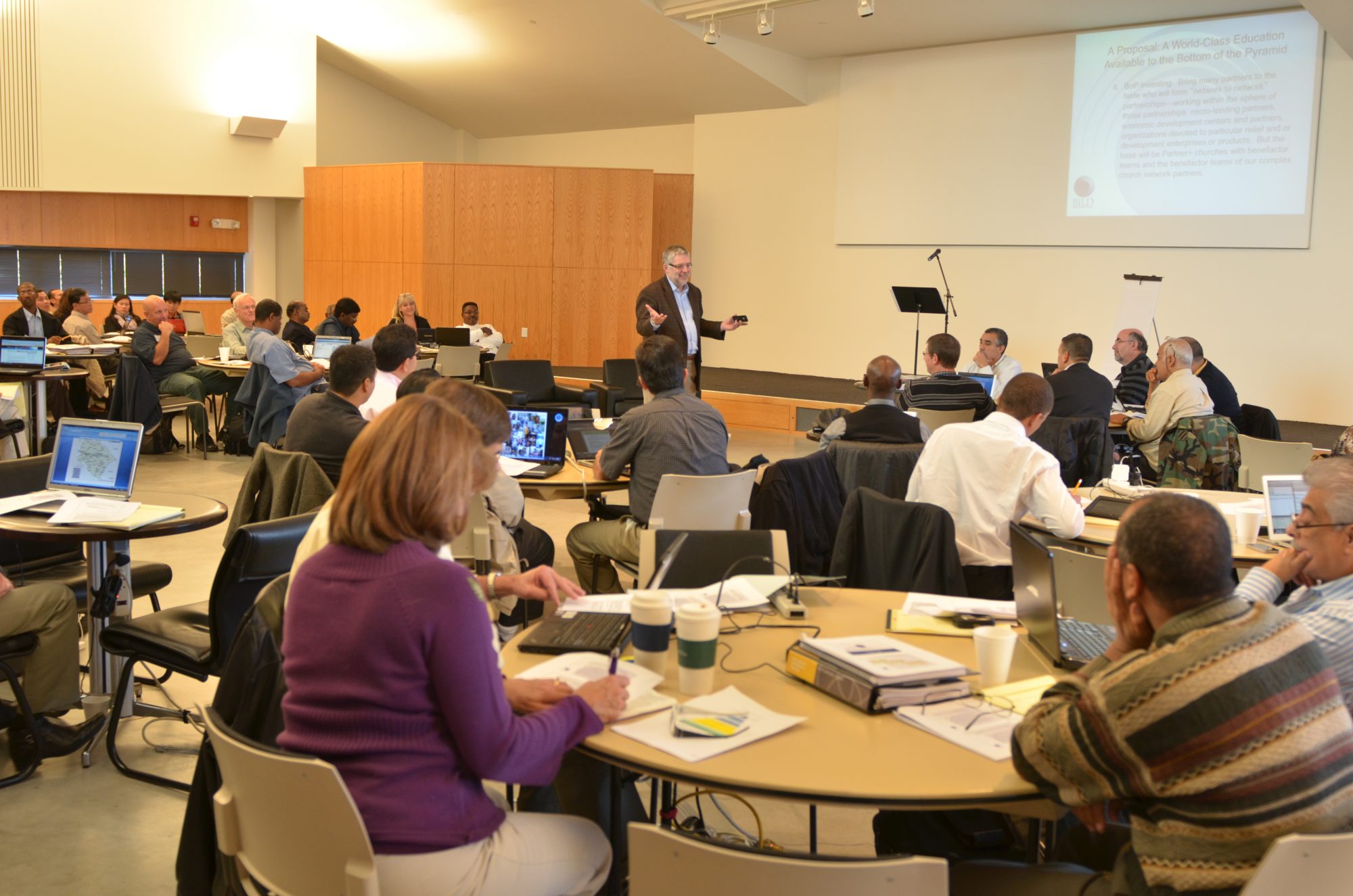
This year’s conference, perhaps more than ever before, will be a tremendous time of equipping and vision-casting. Jeff Reed’s plenary on Thursday evening, November 3rd will be on “Doing Theology in Culture.” Various workshops throughout the conference will provide training on using BILD Cloud, creating artifacts and doing portfolio assessment (for Leadership Series courses, Ministry Practicum, Life and Ministry Development), teaching First Principles, teaching Leadership Series courses, leading Socratic discussions, and having discipline in Antioch School programs.

And, of course, you have the incredible opportunity to fellowship with apostolic leaders from around the world and church leaders from North America.

Where else in the world can you do all this? Nowhere but Ames, Iowa
The Antioch School has been Reaccredited!

“The Antioch School recognition is “national accreditation,” granted by the Distance Education Accrediting Council because they specialize in non-traditional forms of education, such as online learning and competency-based education.”

Accreditation is a rigorous process for academic institutions. There are two forms of legitimate accreditation in the United States (granted by accrediting agencies recognized by the Council on Higher Education Accreditation and the U.S. Department of Education). “Regional Accreditation” is the general recognition of traditional universities and colleges granted by seven regional agencies in the U.S. “National Accreditation” is the specialized recognition of institutions within a particular sector of higher education, such as medical or veterinary education. If you are having surgery, you most likely want a surgeon who has graduated from a medical school accredited by the American Medical Association (AMA). The Antioch School recognition is also “national accreditation,” granted by the Distance Education Accrediting Council because they specialize in non-traditional forms of education, such as online learning and competency-based education.

Accreditation by DEAC is particularly valuable because of its rigor and expertise. Most accrediting agencies are still just learning how to evaluate the non-traditional programs of its traditional institutions, but DEAC has been focused on non-traditional programs for 90 years. DEAC is a leader in the use of outcomes assessment in higher education and is miles ahead of most other agencies in this regards, as evidenced by the very significant role that DEAC plays in the Council on Higher Education Accreditation. The Antioch School received the maximum length of reaccreditation from DEAC, namely 5 years from the start of our reaccreditation process, because DEAC thinks that the 10 years often granted by regional accrediting agencies is far too long to provide a meaningful ongoing declaration about an institution’s quality.

logo

DEAC is a leader in the use of outcomes assessment in higher education and is miles ahead of most other agencies in this regards…”

On April 7, 2016, we received a site visit from a team of six DEAC evaluators, including a chairperson, an education standards evaluator, a business standards evaluator, a ministry content expert, a theology content expert, and a staff person. They arrived having each already scrutinized our 50,000 word Self-Evaluation Report (with 60 exhibits) and the reports from the independent course evaluators. They interviewed staff, faculty, students, and Certified Leaders. They reviewed files, policies, and facilities. They compiled a Chair’s Report to address 70+ indicators of compliance with DEAC standards. Fortunately, our response was quite brief because there were only a few points that needed to be addressed. The DEAC Accrediting Commission met late June and announced in late July the granting of our reaccreditation.

Thank you to all who helped us with the reaccreditation process. Many students and Certified Leaders were contacted by phone during the site visit. Many more were contacted through surveys. Some unknowingly served as models of admission, service, and BILD Cloud portfolio assessment processes as site visit team members arbitrarily chose examples to review. And many of you have been praying. Indeed God has answered your prayers and honored the hard work of the Antioch School, both its staff and its partner churches and ministry organizations around the world.

The Antioch School of Church Planting and Leadership Development is accredited by the Accrediting Commission of the Distance Education and Accrediting Commission (DEAC), 1101 17th Street NW, Suite 808, Washington, DC 20036, (202) 234-5100, www.deac.org.

Making Progress Toward Graduation – Academic Progress Requirements

BILD Cloud is very transparent regarding what work has been submitted by students as evidence of competency, as well as initial assessment by Certified Leaders and validation assessment by Associate Faculty. The Antioch School has established Academic Progress Requirements to indicate the minimum that is expected of a student. These requirements are not an indication of the pace to complete a program quickly. Rather, these requirements help to provide accountability to keep you going toward our common goal of graduation.

One of the best features of competency-based education is the flexibility of the content and timing of what you submit as evidence of competency. However, the flexibility of timing may also be a trap for some Antioch School students who let too much time pass without posting evidence of competency. In order to provide accountability, we have academic progress requirements regarding the timing for students to demonstrate minimum amounts of evidence of competency. See below for the full statement of requirements.

Progress arrows

Please note that it is not our intention to penalize anyone for the flexibility of competency-based education. If you have a good reason for not having met the academic progress requirements, please let us know. The requirements and academic probation warnings are intended to help you make progress, particularly if you need the accountability.

* Academic progress requirements include:

Assignment or Course Deadline
SIMA Autobiographical Form within 3 months of admission
SIMA MAP Response each 12 month period
LifeN Plan (or annual revision) each 12 month period
Personal Development Assessment Quaterly Reports each 12 month period
Competency for a Leadership Series Course ** within 12 months of admission, then each 6 month period until all are done
Initial Integrated Ministry Plan ***

  • Interim Plan
  • Future Plan
24 months of admission

  • within 36 months
  • within 48 monhts
Ministry Practicum Report each 6 month period until all are done
Teaching Practicum Report each 12 month period until all are done

If you have not yet activated your BILD Cloud account and started to use your portfolio, please visit the Help Center for tutorials.


* Update: as of 8/09/16, this chart and article were revised to reflect the current May 2016 Handbook.

** There are times when students need to move through the courses at a slower pace while still showing progress on elements of the program. If this is your circumstance, please contact us.

*** If you have a good reason for completing Leadership Series courses at a slower pace, the deadlines for Ministry Strategy Plans can be adjusted.

Competency Tips

So, you have finished a BILD Leadership Series course, but now you wonder “What am I supposed to put in my e-Portfolio as a demonstration of competency?”

As you know, the Antioch School is a competency-based academic institution. You don’t get credit merely for doing Leadership Series courses and their projects. Rather, you get credit for demonstrating competencies associated with the courses.

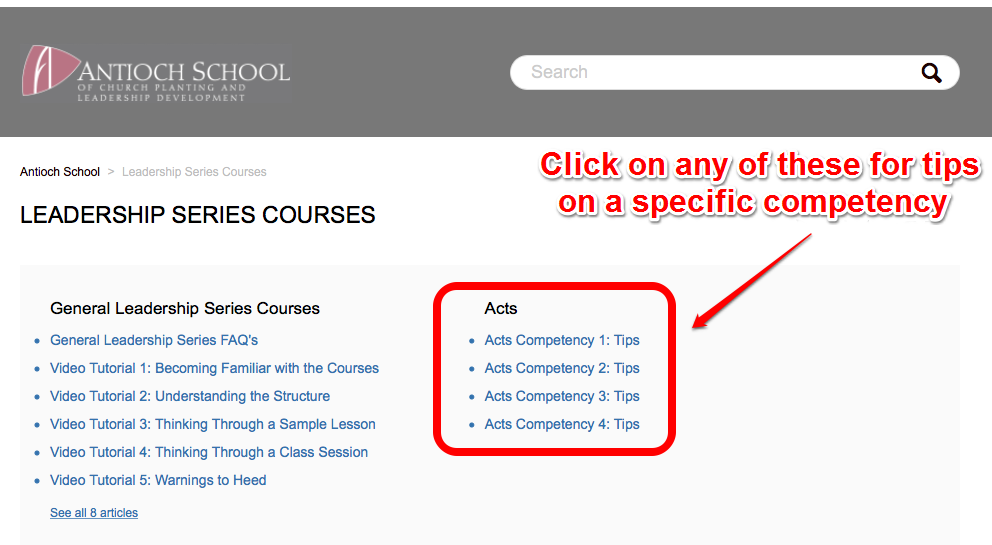
Here is a link to the Antioch School Help Center in which you will find “competency tips” for each of the Leadership Series courses required for Ministry degree and certificate programs. For the most part, these tips help you to know which projects to use (and how to use them) to demonstrate each of the competencies in the courses.

Also, please note that we have revised the Student Competency Assessment Guide. Specifically, we have provided more explanation of what is meant by each of the criteria by which Leadership Series course competencies are to be assessed. Also, we have add additional rubrics for the “accuracy” criteria of each Leadership Series course so that you can know more of what is expected.

We hope that these additional services will help you as you do your work in the Leadership Series courses, but also as you demonstrate competencies and do your self-assessment in BILD Cloud in order to earn Antioch School credit.

And if you have questions about the “competency tips,” you may discuss them with other students, Certified Leaders, and Faculty in the Community Discussion Board.


Formal and Nonformal Education

Here is an article written for the forthcoming Encyclopedia of Christian Education, called “Formal Versus Nonformal Education” by Stephen Kemp, Academic Dean of the Antioch School.  We thought you might enjoy an early sneak peek.  See our blog for other sneak peeks of articles on “Church-Based Theological Education” and “Leadership Development in the First Century: Paul.”

Formal models of theological education are characterized by the schooling paradigm, whereas nonformal models are not. Rather, nonformal models of theological are characterized by intentional learning in real-life contexts. The differences can be seen through descriptions related to the following categories.



Location. Formal theological education most often takes place on an academic campus. More specifically, it takes place primarily in classrooms according to academic structures. Even distance education programs largely attempt to replicate campus experiences. Nonformal theological education takes place primarily in churches and other ministry contexts according to ministry structures.

Orientation. Formal theological education recipients are generally called students and are expected to be able to function as scholars-in-training with a pre-service orientation. Nonformal theological education recipients are generally called apprentices and are expected to be able to function as ministers-in-training with an in-service orientation.

Curriculum. Formal theological education organizes largely according to academic disciplines and the fourfold curriculum (Bible, Theology, Church History, and Practical Theology) expressed in an often fragmented array of courses. Nonformal theological education may vary greatly in terms of curricular structure from mere observation and reflection on experiences to an intentionally designed set of integrated competencies that are carefully assessed.

Learning Community. Formal theological education learning communities are composed of students enrolled in an academic institution being guided by faculty members. Even in distance education online courses, the discussion forums are composed of students from around the world in conversation with each other and a faculty member. Nonformal theological education learning communities are composed of apprentices in the midst of relationships in their churches, ministries, families, and other forms of community.

Assessment. Formal theological education assessment takes place primarily through examinations and research papers related to content acquisition and critical thinking. Nonformal theological education assessment takes place primarily through review of artifacts and attestations related to character and ministry skill development.

Credentialing. Formal theological education provides academic credentials that are often closely linked to ministry credentialing processes. In most cases, it is difficult to participate in formal theological education apart from an academic credential track. Nonformal theological education is usually linked to ministry credentialing processes, but not always linked to academic credentials, though it is becoming much more common, such as with the Antioch School of Church Planting and Leadership Development.

Bibliography

  • Kemp, Stephen. “Situated Learning: Optimizing Experiential Learning Through God-Given Learning Community.” Christian Education Journal, Series 3, Volume 7, No. 1 (Spring 2010): 118-143.
  • Reed, Jeff. “Church-Based Training That Is Truly Church-Based.” Ames, Iowa: BILD International, 2001. Accessed April 30, 2013.
  • Ward, Ted W. “Education That Makes a Difference.” Common Ground Journal 10, no. 1 (Fall 2012): 22-25.

7 Key Questions To Be Asking During Exponential 2011

As Exponential 2011 approaches, how can you as a church leader be thinking from a church-based leadership development perspective?

We’ve compiled 7 key questions for leaders to be considering about the ideas, topics, and discussions that will be taking place before, during, and after the Exponential church planting conference.  As you listen to speakers at Exponential (or elsewhere), ask yourself these questions:

  1. What do they mean by “church?
  2. How do they treat the Pastoral Epistles?
  3. How do they picture Jesus?
  4. Where do they focus on leadership development?
  5. What do they mean by discipleship?
  6. What is the author’s intention for the passage being cited?
  7. What is the global significance of what is being said?

Leading up to Exponential 2011 on April 26-29, we will be expanding on one of these questions each day.  Even if you aren’t going to Exponential, we invite you to join in the conversation with us.

Ways to join the discussion:


Follow along here on the Antioch School blog.  Leave your comments and engage in the discussion!


Follow Steve Kemp on twitter for real-time updates during Exponential.