Training | Antioch School

What is Your Training Plan?

Did you make some New Year’s resolutions? Lose some weight. Exercise more. Make progress on your Antioch School program.

Seriously, this is a perfect time to think about your training plan for 2017. Perhaps you can consider how to make progress in each aspect of your degree program.

For instance:

SIMA

      • What is the next step in your SIMA MAP Response?
      • Have you written and submitted your stories?
      • Have you had your interview?
      • Have you prepared a response?

Make your next step part of your plan for 2017. Don’t just make it a general goal. Identify a specific time when you are going to focus on it.

Personal Development

Or maybe you should focus on your Personal Development Plan. After all, it is the perfect tool to help you think about the other parts of your Antioch School program (and more).

      • Use the PDA forms as a point of reference
      • Report about meetings with mentors

For many, earning credit for the Personal Development Assessments requirement is really just a matter of posting a simple report about your mentor’s use of the PDA forms as a point of reference. Perhaps you can start 2017 with earning credit for reporting about meetings with mentors in late 2016.

oqmzwnd3thu-helloquence

“Make your next step part of your plan for 2017. Don’t just make it a general goal. Identify a specific time when you are going to focus on it.”

Leadership Series Courses

      • Have you uploaded your work on BILD Cloud?
      • Visit the Help Center for competency tips

As you prepare to start a new Leadership Series course, try to make sure that you have produced a body of work that demonstrates each of the competencies associated with the course you most recently finished. Even if you didn’t complete all the projects to your satisfaction, focus now on the competencies and criteria in the BILD Cloud rubrics.

Ministry Practicum

      • Identify some area of ministry to grow in
      • Utilize the template and example in the Practicum Guide

Similarly, as you begin 2017, identify some area of ministry that you can use as a Ministry Practicum. Use the template and example in the Practicum Guide to help you set goals and prepare to make a ministry experience into a fulfillment of the Ministry Practicum requirement.

It is unusual for students to achieve more than they plan in a year. Don’t make unreasonable plans, but do take some time this early January to make some plans for how you can make progress in each area of your Antioch School program.

Creating a Training Culture in Your Church

“The Apostle Paul fostered a developmental culture within his team, across his network, and within each church that he established.”

The Apostle Paul fostered a developmental culture within his team, across his network, and within each church that he established. Several things make this clear. First, he regularly assessed the maturity of the churches he had planted and let them know how he assessed them. Second, he worked tirelessly to train the leaders who would minister within and among these churches.  Third, he challenged leaders to both show progress in their own development and to give effort to the training of others.

How do you form such a similar, vibrant training culture if it does not currently exist in your church?  At least three elements must be present – vision, example, and flexible structures.

It starts with vision from the senior leader and core leadership team.

Senior leaders must value and envision a developmental culture. As steps are taken to create this culture, they must continue to cast vision, persistently answering the question of why time and energy is being given to training. Beneath this vision must be a fundamental conviction that 2 Timothy 2:2 is a mandate, not an option.  Strong churches and sustained movements of church multiplication simply will not happen without training leaders in the context of ministry.

Vision must be reinforced by example. 

The church needs to see existing leaders taking their own development seriously.  It also needs to see emerging leaders making evident progress as a result of training.  And it needs to see a range of its members investing in lifelong learning and experiencing fruit.  These examples spur others to imitation.

Flexible structures must be used as tools to aid development.

When Paul invested day and night for 3 years in the training of the Ephesus elders, choices had to have been made regarding times and places for teaching, topics to be covered, and shepherding skills that needed to be modeled.  Likewise, today we must create practical training structures which shape leaders while flexing with the realities of ministry.  These structures will necessarily be tailored to each situation, but some core elements will hold true in any ministry context.  For example:

  • Establish a weekly time slot for equipping. What will work? A weekday evening? A Saturday morning?  Adjust this as the ministry requires.
  • Create mentoring habits. Leaders in training might begin by connecting every other week over breakfast. Then make the time more frequent or less according to need.
  • Develop quarterly rhythms to gather and assess the body of work being developed by those who are studying the scriptures together.
  • Schedule annual leader retreats to cast vision and reinforce discipline.

Guys

Our partners who are working with Antioch School cohorts should recognize that every component of an Antioch School training program fits within these broad structures.

“2 Timothy 2:2 is a mandate, not an option.”

Many things will distract you from fostering a training culture in your church or church network.  Congregational expectations may need to be corrected.  Ministry needs will demand your time. Developing new leaders will take longer than you planned. Despite this, if you are the leader giving concentrated effort to create a training culture, find courage and resolve in the knowledge that your strategic investment will bear fruit now just as it did in the early church.

Online College Students: 2014 Survey of Online Learning

Occasionally, we like to put the Antioch School in the context of the larger landscape.  The 2014 Survey of Online Learning gives us such an opportunity.  Here are some comments about the Antioch School in light of 11 key findings about online college students in the recent work by the Babsen Survey Research Group and the Online Learning Consortium.

1. Online students are enrolling at institutions further away from their residence.

A slight majority of undergraduates report enrolling in a campus or center within 100 miles of where they live but less than half of graduate students do the same. Three-year trends show students are increasingly willing to attend an institution farther from home. (In 2012, 80% reported attending an institution within 100 miles of where they lived. This declined to 69% in 2013 and 54% in 2014.) 

The Antioch School certainly fits this finding.  Only a small percentage of our students live within 100 miles of our headquarters.  For most of our students, it is the location of their own churches that is important, not the location of the Antioch School.

2. Although cost and financial aid are important to online students, these are not deciding factors in their selection of an online program.

Although cost remained a top selection factor and the most-often-asked question of enrollment advisors, students demonstrated that they are balancing quality and cost. Sixty-six percent of undergraduate online students and 79% of graduate online students who had already enrolled report that they did not select the least expensive program available. Financial aid was critical for about half of those surveyed, yet only 20% say they would not attend an institution if their financial aid needs had not been met.

The low cost of tuition in the Antioch School is an important factor for most Antioch School students because many would not be pursuing a degree if they didn’t think it was affordable.  Although the Antioch School does not offer federal financial aid, many students still do rely on the financial support of their churches or ministry organizations.

 3. Online students are looking to improve their employment situation and are satisfied with their investment in an online degree.

A large majority of students pursuing online degrees and certificates are doing so for employment-related reasons. They want full-time jobs, new jobs, better jobs, or need more training for their current jobs. Within a year of graduation, about 40% report improvement in their employment status, typically a raise or promotion. About 60% of undergraduates and 70% of graduate students report being completely satisfied with their investment of time and money.

Currently, most students enrolled in the Antioch School who are looking for employment related to their academic programs are doing so in vocational ministry fields.  However, most don’t see the connection between Antioch School programs and other vocational fields.  Yet, there is vast potential for using the Ministry Practicum (and additional practicum in the free elective category) to help students vocationally in fields for which there are connections in their churches.

4. High job placement rate is the most appealing marketing message.

 Given a choice of 18 different marketing messages, the overwhelming favorite was “90% job placement.” Three messages were runners-ups: “Earn your degree in one year,” “study at your own pace,” and “free textbooks.”

The Antioch School doesn’t market its high placement rate.  However, most of our students are already “placed” and being trained for ministry where they already are . . . as well as for the church planting efforts of their churches.

 5. Although many universities prefer to price by credit hour, most students prefer to think of the total degree cost. In general, students appear to be confused about the price they pay.

 Most students, both undergraduate and graduate, prefer to think about cost in terms of the entire degree with per course pricing their second choice at 33%. Per credit is the least favored way to think about price.

 The Antioch School is ahead of this trend because our program enrollment has tuition tied to programs and monthly payments rather than tuition tied to credit hours.

 6. About 80% of online undergraduates have earned credit elsewhere and transfer credit is important to them.

 As in 2013, a large majority of online undergraduate students bring credits with them. About half report having “most” or “all” of their transfer credits accepted. Almost 80% report it is very important that they can easily find information about transfer credits, have their questions answered quickly, and receive prompt decisions about transfer credit from institutions of interest.

It is also true that most Antioch School undergraduate students utilize transfer credit for General Education and/or Free Electives.


7. Business continues to be the most common field of study.

 Business and related fields continue to enroll the most online students with more than 25% of the total. Professional fields such as IT, criminal justice, and nursing are also popular. Although there are a handful of disciplines that attract large enrollments, students report more than 140 different fields or specializations of interest. Within the business discipline, for example, undergraduate students select a wide variety of specializations with accounting, business communications, and business administration being the most popular, while graduate business students are more likely to specialize in a functional area such as accounting, marketing, IT and leadership.

Although the Antioch School does not offer degree programs in “business” and some of these other popular fields, it is important for churches to include in their Antioch School program students who are pursuing other fields so that they have a well-trained team of elders and benefactors, as well as ministers of the Gospel.  Students can use Antioch School credit to transfer into other programs of other institutions, as well as bring the other fields inside Antioch School programs through the Practicum and Free Electives.

8. Reputation and price continue to be key selection criteria.

 Although a number of factors influence the choice of a college, reputation and price continue to be most important. The primary driver of reputation is accreditation followed by recognition, rankings, and recommendations.

The Antioch School’s accreditation is certainly valuable, but it seems that most students enroll in our programs because of the reputation and commendation of the churches and church networks that partner with us.

 9. Some students have a clear preference for online study.

 Almost 90% of online students surveyed report that online study was equal to or better than classroom study. About one-third report they were not likely to have considered classroom or hybrid programs. Among those who started on campus but didn’t complete their degree in that format, most report issues such as personal events, a new job or relocation as the reason.

Antioch School students don’t necessarily prefer online study.  They enroll because of a clear preference for studying in their churches.  We leverage the use of online e-Portfolio assessment in order to provide opportunities to study in churches.

10. A higher percentage of online students are unemployed.

The number of individuals working full time declined from 60% in 2012 to 55% in 2013 and 46% in 2014. The number working part time has been constant, while the number of those who are unemployed rose from 16% to 24% to 30% over the past three consecutive studies.

We don’t know how many Antioch School students are unemployed.  However, we know that nearly all Antioch School students are fully engaged in ministry in their churches.

11. A higher percentage of online students rely only on financial aid to pay for school.

 Since 2012, there has been an increasing trend of students paying for school with “student loans and other financial aid only,” selected by 31% of respondents in 2012, 37% in 2013 and 40% in 2014.

The Antioch School doesn’t make federal financial aid available to our students, so they don’t rely on it at all.  However, they often rely heavily on the much lower tuition of the Antioch School.

Grounded in the Gospel

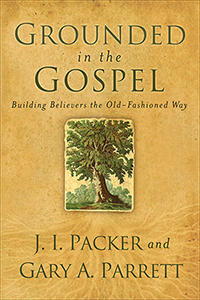
When a book is loaded with some of my favorite BILD terms (such as kerygma, didache, catachesis), it really gets my attention.  Consider this great quote from Grounded in the Gospel: Building Believers in the Old-Fashioned Way by J. I. Packer and Gary Parrett.  “Perhaps 2 Timothy 2:2 best portrays the idea of raising and cultivating catechists [the teachers]” (p. 196).

Packer and Parrett make a superb contribution in this book by building a very strong case for the biblical concept of catechism, which they define as “the church’s ministry of grounding and growing God’s people in the Gospel and its implications for doctrine, devotion, duty, and delight” (p. 29).  My favorite part of the book was Chapter 2 “Catechesis is a (Very!) Biblical Idea.” The authors state that, “One of the most important arguments for ministries of catechesis today derives from the simple fact that believers have been commanded to teach others catechetically” (p. 47).  The chapter concludes, “Catechesis is, indeed, a very biblical idea!  More than that—the ministry of catechesis is actually a biblical imperative” (p. 50).

The term “old-fashioned” in the book’s title and first chapter is clever and could hearken back to the first century, but in the book it refers more to models used in the fourth/fifth centuries and to the Reformation.  Packer and Parrett use the apostle’s letters to make the case for catechism, but don’t really find the content and model for catechism there.  The historical models they present are insightful and helpful, yet it seems that doing more with the catechetical model of the early church, as a biblical model, not just a biblical mandate would have been appropriate since the authors make a case for the New Testament writings being “explicitly catechetical documents” (p. 44).  Similarly, the book’s biblical kerygmatic statements are summaries with little attention to the actual statements of the apostles presented by Luke in Acts.

A rather elegant model is presented in Chapter 4 of the content that Packer and Parrett recommend for catechesis.  It is called “5-4-3-2-1” which refers to Five Founts (Triune God, Scripture, the Story, the Gospel, the Faith), Four Fixtures (Creed, Lord’s Prayer, Decalogue, Sacraments), Three Facets (The Truth, The Life, The Way), Two Fundamentals (Love of God, Love of Neighbor), and One Focus (Proclaim Christ).  As you can tell from the model, there may be some important things missing from a BILD perspective.  For instance, the church itself is assumed, participation in the church is presented largely through worship services (probably because that is where the sacraments are dispensed) rather than as a family of families, there is not a synthesis of the practical instructions of the epistles related to household order, and the apostolic mission of church planting and church establishing does not seem to be emphasized.  I wonder if Packer and Parrett would think that BILD’s First Principles are too simplistic, too focused on Paul’s letters, and not connected tightly enough to the historic church and its institutional expressions.  It would have also been interesting if the authors had done more critique of current Christian Education curriculum and formal theological education programs, perhaps re-envisioning seminaries and Bible colleges are training programs for catechists based on their model, especially in light of their recognition of 2 Timothy 2:2 as referring to catechists.

Packer and Parrett get practical in Chapter 9 and show what their model could look like when implemented in a church.  They present it in terms of three phases: procatechesis (perhaps better called precatechesis), catechesis proper, and ongoing catechesis.  They also address the program in terms of its formal, nonformal, and informal manifestations.  It is in this chapter that the concerns from a BILD perspective mentioned above are confirmed.

The various levels of a catechism are presented in a manner than helps determine levels of dogmatism (my word, not theirs) and nature of compliance (again, my word) that should be associated with the various levels.  There are matters of Christian Consensus (that extend beyond evangelicalism), Evangelical Essentials, Denominational Distinctives, and Congregational Commitments (p. 150).  This also illustrates the author’s aptness for alliteration (see, I just did one there myself).  This taxonomy is extremely helpful in thinking about what it means to be orthodox and biblical.

Toward the end of the book, in the practical section, the authors challenge us to “accurately assess the current situation” (p. 198).  However, they never even mention the idea of assessing the catechumens [students].  It seems that any catechetical system must have a trustworthy assessment component to be truly effective.  The description of the causes for the historical decline of catechesis in Chapter 3 on “The Waxing and Waning of Catechesis” provides a nice set of warnings to be heeded in practical implementation.

Perhaps my biggest concern with the book is evident in the subtitle “Building Believers.”  It is vitally important to build believers, but we are building believers in order to build churches and participate in the progress of the Gospel.  Of course, I don’t think that Packer and Parrett would disagree, but they don’t do enough to address this explicitly in their book.  One of the hazards of evangelicalism has been to make assumptions about the local church, invest heavily in parachurch ministries, and marginalize churches in the process.  For decades, evangelicals have attempted to build up believers and train leaders without focusing directly on the strengthening of churches, and now we all bemoan the general state of irrelevance and biblical illiteracy in our churches.  The New Testament model of catechesis in the early church emphasizes “equipping the saints for ministry . . . so that the body of Christ may be built up . . . attaining to the whole measure of the fullness of Christ” (Ephesians 4) as the core work of the church so that it can participate fully in the progress of the Gospel.  It was a matter of “strengthening the churches” (Acts 15:41), not just “building believers.”  Packer and Parrett describe the “ends for which we catechize” (pp. 184-5) largely in terms of the development of individuals and “unity” is largely a matter of common beliefs and worship practices.  However, catechesis is not a just program that a church offers to individuals, but the essence of what a church is as a corporate unit on mission in Christ’s kingdom.

Let me end with one of the nearly hidden gems of this book.  Gary Parrett is a prolific hymn writer.  The first appendix provides several hymns that are very well-suited for catechetical use.  The role of music as a catechetical tool has been terribly overlooked, particularly in light of passages that tell us to “admonish one another with songs, hymns, and spiritual songs” (Col. 3:16).  Many BILD partners around the world that work in areas characterized by oral culture give testimony to the power of song in the communication of the Gospel, building up of believers, and even the training of leaders.  And in these cases, there is no doubt that “building believers” is being done in the context of planting and establishing churches to participate in the progress of the Gospel.

Formal and Nonformal Education

Here is an article written for the forthcoming Encyclopedia of Christian Education, called “Formal Versus Nonformal Education” by Stephen Kemp, Academic Dean of the Antioch School.  We thought you might enjoy an early sneak peek.  See our blog for other sneak peeks of articles on “Church-Based Theological Education” and “Leadership Development in the First Century: Paul.”

Formal models of theological education are characterized by the schooling paradigm, whereas nonformal models are not. Rather, nonformal models of theological are characterized by intentional learning in real-life contexts. The differences can be seen through descriptions related to the following categories.

Location. Formal theological education most often takes place on an academic campus. More specifically, it takes place primarily in classrooms according to academic structures. Even distance education programs largely attempt to replicate campus experiences. Nonformal theological education takes place primarily in churches and other ministry contexts according to ministry structures.

Orientation. Formal theological education recipients are generally called students and are expected to be able to function as scholars-in-training with a pre-service orientation. Nonformal theological education recipients are generally called apprentices and are expected to be able to function as ministers-in-training with an in-service orientation.

Curriculum. Formal theological education organizes largely according to academic disciplines and the fourfold curriculum (Bible, Theology, Church History, and Practical Theology) expressed in an often fragmented array of courses. Nonformal theological education may vary greatly in terms of curricular structure from mere observation and reflection on experiences to an intentionally designed set of integrated competencies that are carefully assessed.

Learning Community. Formal theological education learning communities are composed of students enrolled in an academic institution being guided by faculty members. Even in distance education online courses, the discussion forums are composed of students from around the world in conversation with each other and a faculty member. Nonformal theological education learning communities are composed of apprentices in the midst of relationships in their churches, ministries, families, and other forms of community.

Assessment. Formal theological education assessment takes place primarily through examinations and research papers related to content acquisition and critical thinking. Nonformal theological education assessment takes place primarily through review of artifacts and attestations related to character and ministry skill development.

Credentialing. Formal theological education provides academic credentials that are often closely linked to ministry credentialing processes. In most cases, it is difficult to participate in formal theological education apart from an academic credential track. Nonformal theological education is usually linked to ministry credentialing processes, but not always linked to academic credentials, though it is becoming much more common, such as with the Antioch School of Church Planting and Leadership Development.

Bibliography

  • Kemp, Stephen. “Situated Learning: Optimizing Experiential Learning Through God-Given Learning Community.” Christian Education Journal, Series 3, Volume 7, No. 1 (Spring 2010): 118-143.
  • Reed, Jeff. “Church-Based Training That Is Truly Church-Based.” Ames, Iowa: BILD International, 2001. Accessed April 30, 2013.
  • Ward, Ted W. “Education That Makes a Difference.” Common Ground Journal 10, no. 1 (Fall 2012): 22-25.

Sneak Peek: Church-Based Theological Education

Here is an article written for the forthcoming Encyclopedia of Christian Education, called “Church-Based Theological Education” by Stephen Kemp, Academic Dean of the Antioch School.  We thought you might enjoy an early sneak peek. 

Church-Based Theological Education (CBTE) is training for ministry leadership that is rooted in local churches. Those being trained emerge from within a church or become part of a church. Those doing the training are the leaders of a church. Participation in the real life of a local church is the essential core.

It may be best to understand CBTE in light of its contrast with other types of training programs that take place in churches. For instance, “Church-Based Christian Education” tends to focus on discipleship training for everyone in a church whereas CBTE is generally understood to refer to the higher levels of training for church leaders.

Most distance education and extension programs of traditional academic institutions may use the facilities of a church or allow students to remain in their churches rather than relocate to a campus, but these are usually still “school-based” and only “church-housed” because the training is not truly rooted in the churches and church leaders are not truly central to the training. Those being trained must still be admitted by the academic institution to take part in the training, trainers must be approved according to academic criteria, and curriculum is firmly controlled by the academic institution. Those being trained in CBTE programs are selected by the church leaders and trained by the church leaders according to training processes that they develop and control.

Many traditional academic institutions grew out of CBTE programs, such as groups of pastors gathering regionally for informal continuing education. Some students enrolled in traditional academic institutions have educational experiences with CBTE features. For instance, some students are on staff with local churches or have extensive ministry experiences within local churches while enrolled. Others maintain mentoring and accountability relationships with leaders of local churches while they pursue traditional school-based forms of theological education.

“Nonformal” is often used to describe CBTE because it is based in a real church situation and relies extensively on real relationships outside the formal structures of traditional academic institutions. The curriculum is composed largely of mentoring and in-service apprenticeships with intentionally designed goals and assessments regarding character development, ministry skills, and biblical and theological understanding.

Increasingly, CBTE is being used as an alternative to traditional campus-based and school-based distance education forms of education, particularly for those experiencing mid-career changes and early retirements from non-ministry vocations. It often is tied to ordination and other ministry credentialing processes as high levels of leadership development are achieved. It is also being used extensively to support the in-service training of church planters and leaders emerging from church planting movements. Entire networks of churches in India are using CBTE to train all of their existing and emerging leaders.

Biblically and historically, CBTE refers to the manner in which leaders were developed in the first few centuries as described in II Timothy 2:2. Paul was not merely mentoring Timothy one-on-one to take his place, but guiding him in a process of in-service learning as he participated with Paul in ministry that included the training of others to train others in a manner that supported an apostolic movement of exponential church growth.

Bibliography

What Business Are Schools In?

If McDonald’s is in the fast food business, what business is the Antioch School in?

Most people answer by saying that schools are in the education business, even though they may use different words, such as training or development. However, I think that schools are in the degree-granting business. Let me try to prove it.

Reflect back on the experiences of those you know who have earned a degree from a school. Do you think that most people would have sought the same experience, gone to the same campus, jumped through all the same hoops, paid all the tuition, etc. if they knew that they weren’t going to get a degree? Most people say “no” they wouldn’t have pursued the education if it didn’t also come with the academic credential.

I think that this suggests that schools are not just in the education business, but they are in the business of providing cultural currency in the form of credits and degrees.

The distinction is subtle between being in the education business and being in the degree-granting business, but let me explain it a little further because we think it is very important. Your church, church network, or church planting team is in the education business. You are responsible for developing leaders. BILD is also in the education business. It provides resources to support church-based theological education.

The Antioch School is in the credit and degree-granting business. We don’t provide the “education” or “training,” you do using BILD resources. The Antioch School provides cultural currency in the form of academic credentials for those being “educated” by you. Our strong outcomes-oriented assessment process allows us to award credit and degrees for education that is aligned with the Antioch Tradition of the Early Church rather than the Western schooling paradigm. Contemporary higher education itself is moving in this direction and the Antioch School is positioned at the forefront of this movement as a fully-accredited institution.

We recognize that the church is God’s primary agency for the education of His people, including leaders. BILD provides the resources to support churches doing it and the Antioch School provides the academic credentialing to accompany it.

Keep Your Traction

From time to time we talk with a disappointed leader who started strong with a cohort of students only to see several of them drop out. Clearly the motivations that drive people to begin training do not always push them to continue. Is this normal? How do you create and sustain momentum? In our experience, leaders who maintain energy in their students over time do at least 3 things:

  1. Choose the right people.  As you establish your training process, you may be tempted to accept any and all comers. This will ultimately backfire. While all people within your ministry sphere need to be helped to maturity, only some are ready for development as leaders. We encourage you to vet potential students and carefully choose who you will invest into.
    • Are they well-spoken of by others to whom they minister? Give energy to those whose growth will be accelerated by your investment while at the same time being a help to you.
    • Are they teachable and truly looking for development? Watch out for those who simple want to use you pursue a personal agenda (like getting an easy degree).
    • Have they counted the cost? “Church-based” does not mean “Sunday-school-simple”. The training is well integrated with other life responsibilities, but it still requires discipline.
    • Do they accept that training in-ministry is transformative but also messy? Institutional expectations can cause people to become critical of a process which is actually bearing fruit.
  2. Call for progress.  Students who plateau become bored while students experiencing real change remain motivated.  Keep a vision and expectation for progress in front of the students. Don’t let the courses become academic. Instead, push for transformation of thinking and evidence that the students are using the principles in ministry. Insist on practicums that confront areas of identified needed growth rather than allowing practicums which provide experience but lack teeth.  In your mentoring do not be content to only reach quantitative milestones (“we finished the course”). Rather seek to achieve qualitative change.
  3. Train for mission.  Training for the sake of training holds interest only for a while.  On the other hand when training is needed in order to pull off a critical responsibility, it is compelling and even desperately sought after.  Cast vision around what you are training people for – effective use of their gifts, specific ministry roles within the church, passing the faith to others, or a future church plant.  From day one adopt the posture that “this is not a drill”. You need them to faithfully carry out current ministry responsibilities. You are counting on them.  And you need them to prove themselves in the midst of ministry so you can respond to doors God will yet open. In every way the stakes are real.

Of course it is normal for some who begin training to have legitimate reasons to step back from the process. There can be unforeseen circumstances. A student may even reevaluate his leadership capacity as a result of your input. What we want to highlight here are key principles which will help you maintain traction within an Antioch School training program.  We all know that more is required than administratively enrolling students, assigning mentors, and scheduling classes. We believe the above principles are not only tested but ancient, having been practiced by Paul himself as he took a promising Timothy and intentionally developed him to be a co-worker for the progress of the gospel. “Put these things into practice, devote yourself to them, so that all may see your progress.” (1 Timothy 4:15, NRSV)

Is it really distance education when the church is present?

“Fifteen years ago, many academic leaders thought it was impossible for students to have truly meaningful community interaction in an online distance education environment.  Ironically, one of the biggest struggles today for many traditional campus professors is to keep their students off Facebook during class!”

This is the opening paragraph of “Social Presence in Online Learning,” my chapter in a new book called Best Practices of Online Education:  A Guide for Christian Education.  Edited by Mark A. Maddix, James R. Estep, and Mary E. Lowe. Published by Information Age (2012).

I was asked to write the chapter to describe the tremendous potential of online learning communities, but I went even farther to describe “situated learning” because I believe that truly church-based theological education programs of Antioch School partners are the best learning communities.

Here is my closing paragraph:  “In conclusion, it is clear that social presence is a crucial dimension of effective online learning.  This article has focused on how distance can be broken down in online learning and how presence can be supported and optimized in online and real life social contexts.  Hopefully the consideration of historical perspective, learning theory, and best practices (especially next best practices) can be used to stimulate improvement for weak programs and to strengthen programs that are already strong.”

Here are two excerpts from the chapter that were posted on the Distance-Educator.com website.

The first, called “Social Presence in Online Learning” describes the distance education context and learning theory.  The chapter goes into more detail on theological education in particular.

The second, called “Best Practices in Online Learning” describes best practices and what I call “next best practices” (things that aren’t being done widely, but should).  The chapter in the book also includes sections on common practices and worst practices.

What’s in a Name? “School”

Why did we include the word “school” in our name?  It’s a common enough word that enjoys the luxury of being instantly understood by most people.  But it also carries enough cultural baggage to make it a risky choice often requiring substantial qualification.  This blog is the second in our occasional series that explains our name.

Words carry paradigms.  Most of us who have been immersed in the Western education system have thereby come to associate the word “school” with factory-type buildings, large classrooms, seat-time, professors, lectures, note taking, book learning, rote memorization, quizzes, exams, grades, etc.  Some of us like this approach to learning.  Others don’t.  But most of us share this cultural definition of schooling whether we picked it up through our experience in public or private schools at any level.

Our choice to include the word “school” in our name, in spite of its present-day baggage, is both principled and practical.  Even though we view the Western schooling paradigm to be foreign to the biblical paradigm of education, we’re not willing to abandon the word “school” because it still correctly carries the idea of serious ordered learning that’s essential in developing strong church leaders.  Nearly everyone associates the word “school” with high levels of discipline, scholarship, and acumen which we view to be core competencies in those who must master the Scriptures, guard the faith, and establish churches.  These competencies are substantial enough to be worthy of the academic credit and degrees that we grant as an accredited educational institution or “school.”

A biblical purist might suspect that our choice to include the word “school” in our name reveals a not-so-subtle compromise with the prevailing culture.  But we view it to be a solid example of how biblical theology ought to be translated into contemporary culture.  We’ve created a school that avoids the schooling paradigm yet maintains the highest standards of academic discipline, integrity, and ministry competence that is legitimately represented by the degrees that we grant as cultural currency.  That’s what’s in our name.